Columbia GSAPP — Summer Studio 2025
Site: Kivotos Island, Greece
Individual Work
Instructor: Aristide Antonas
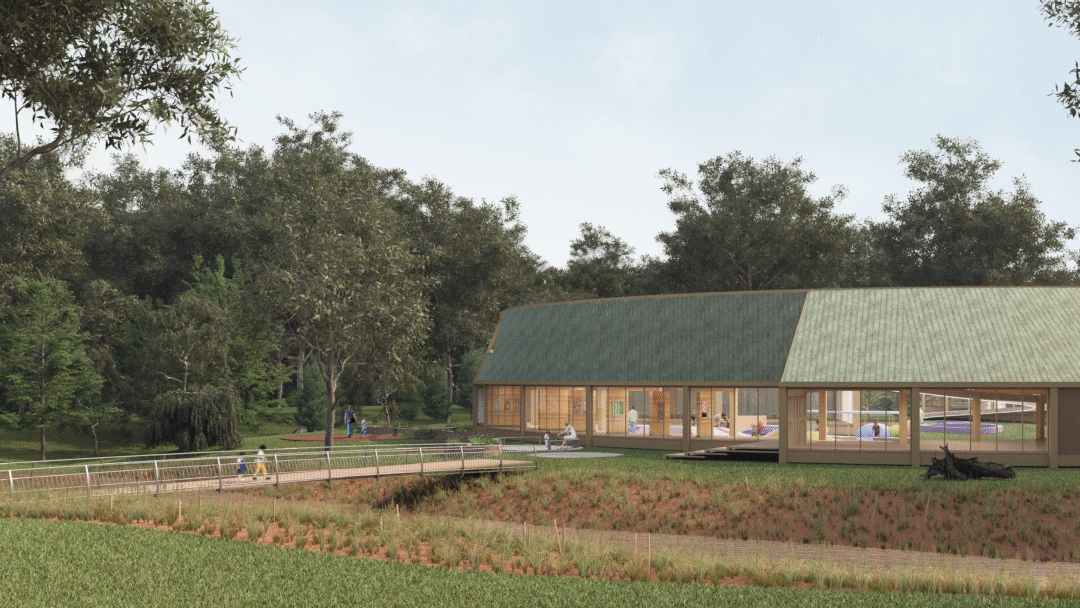
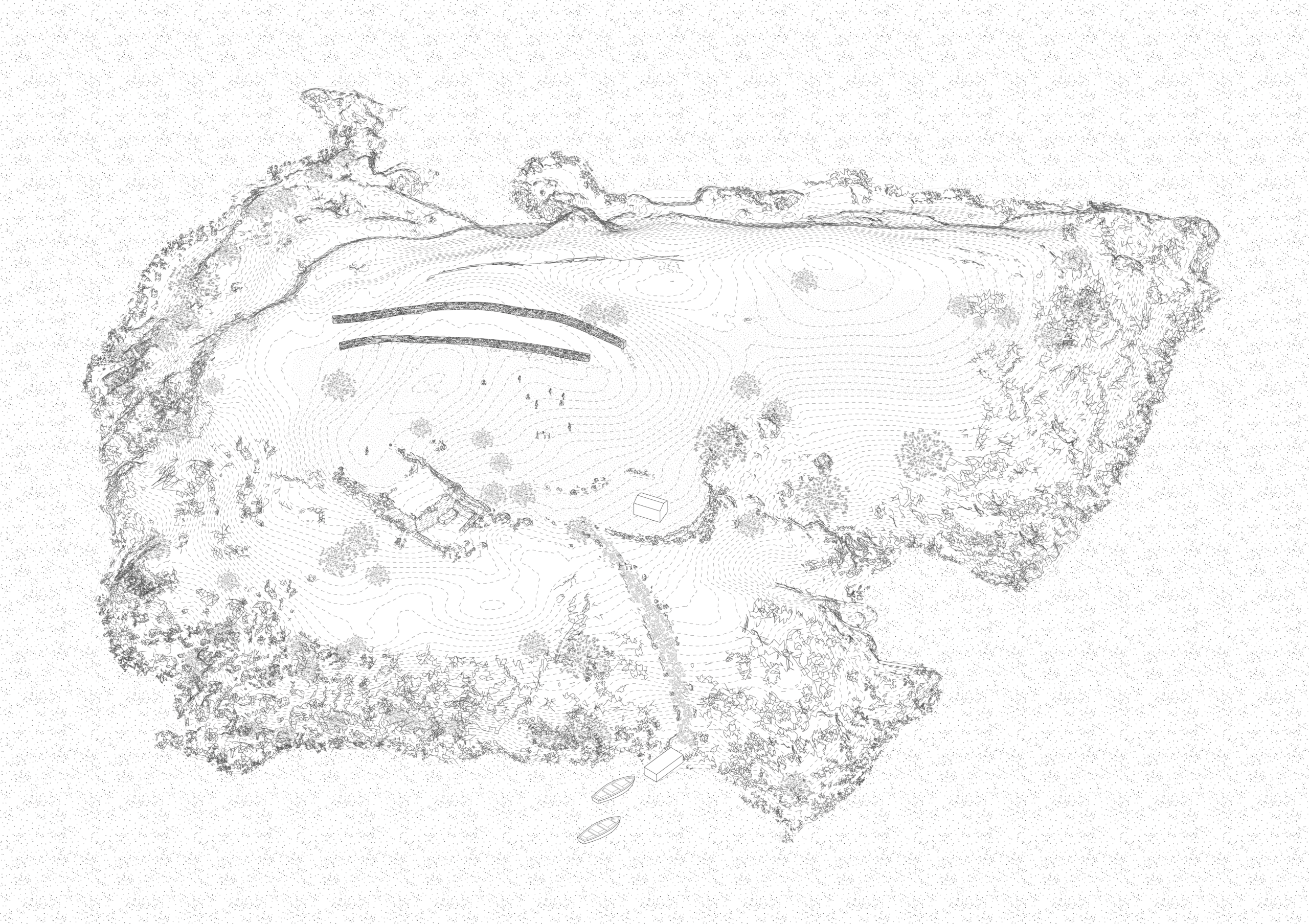
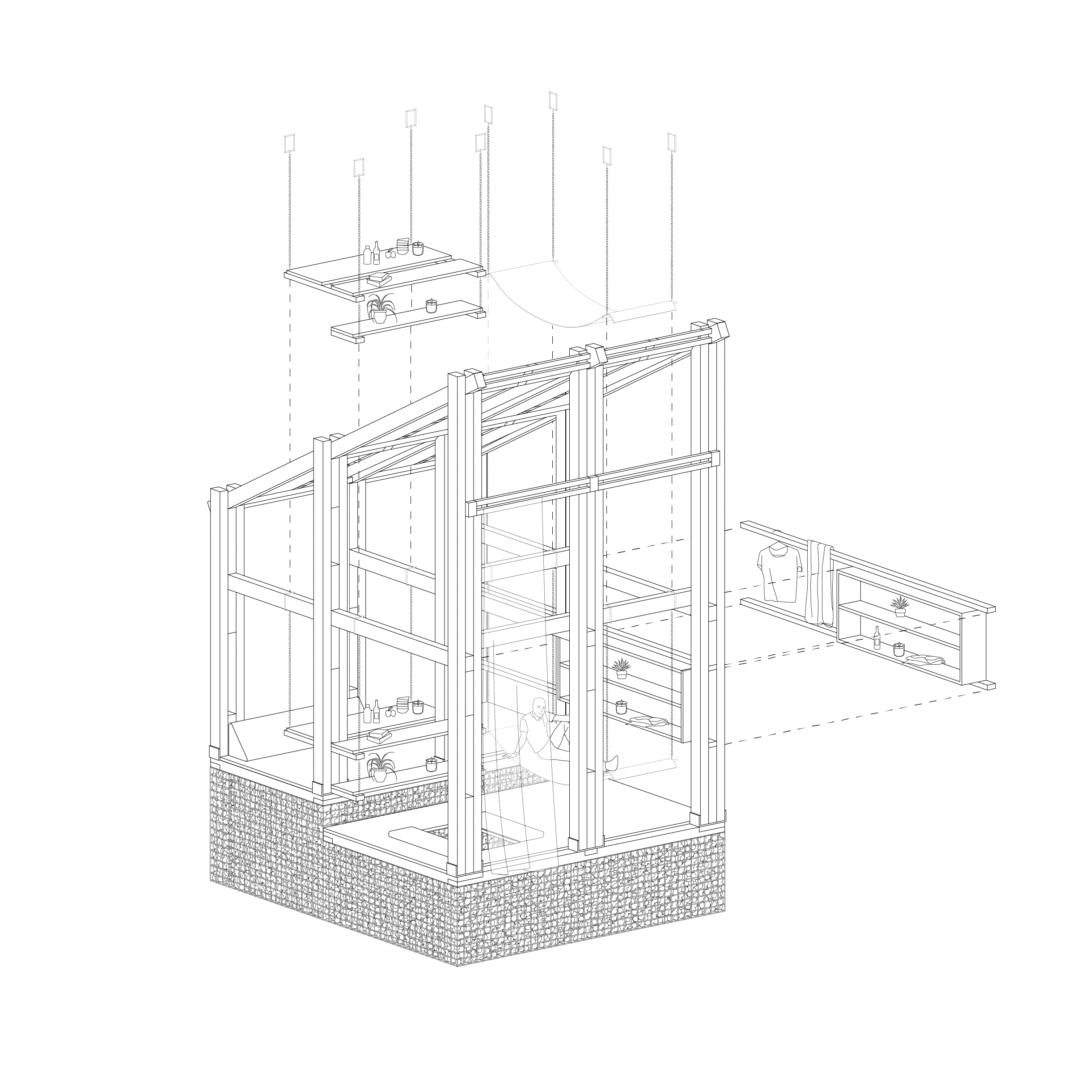
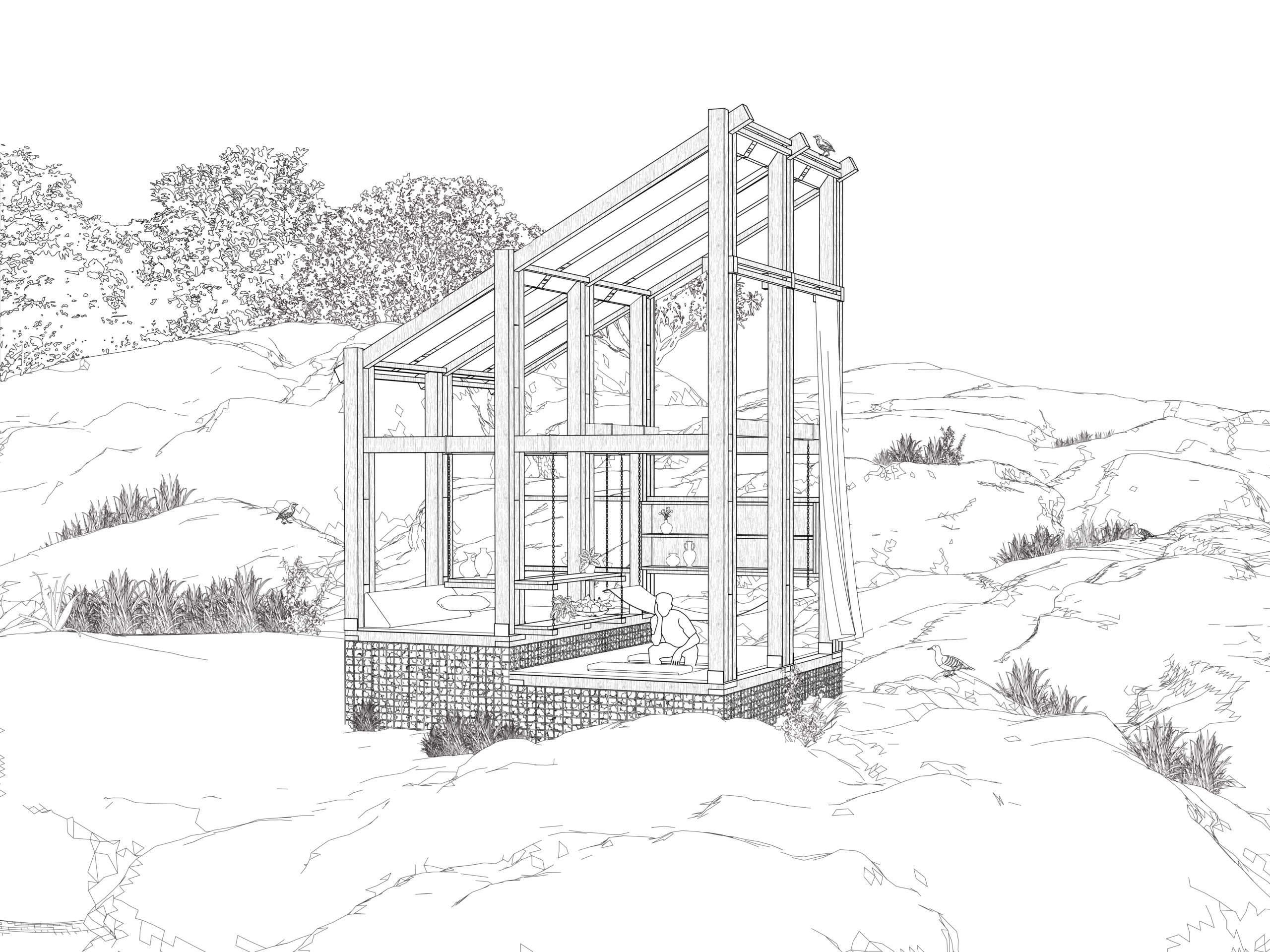
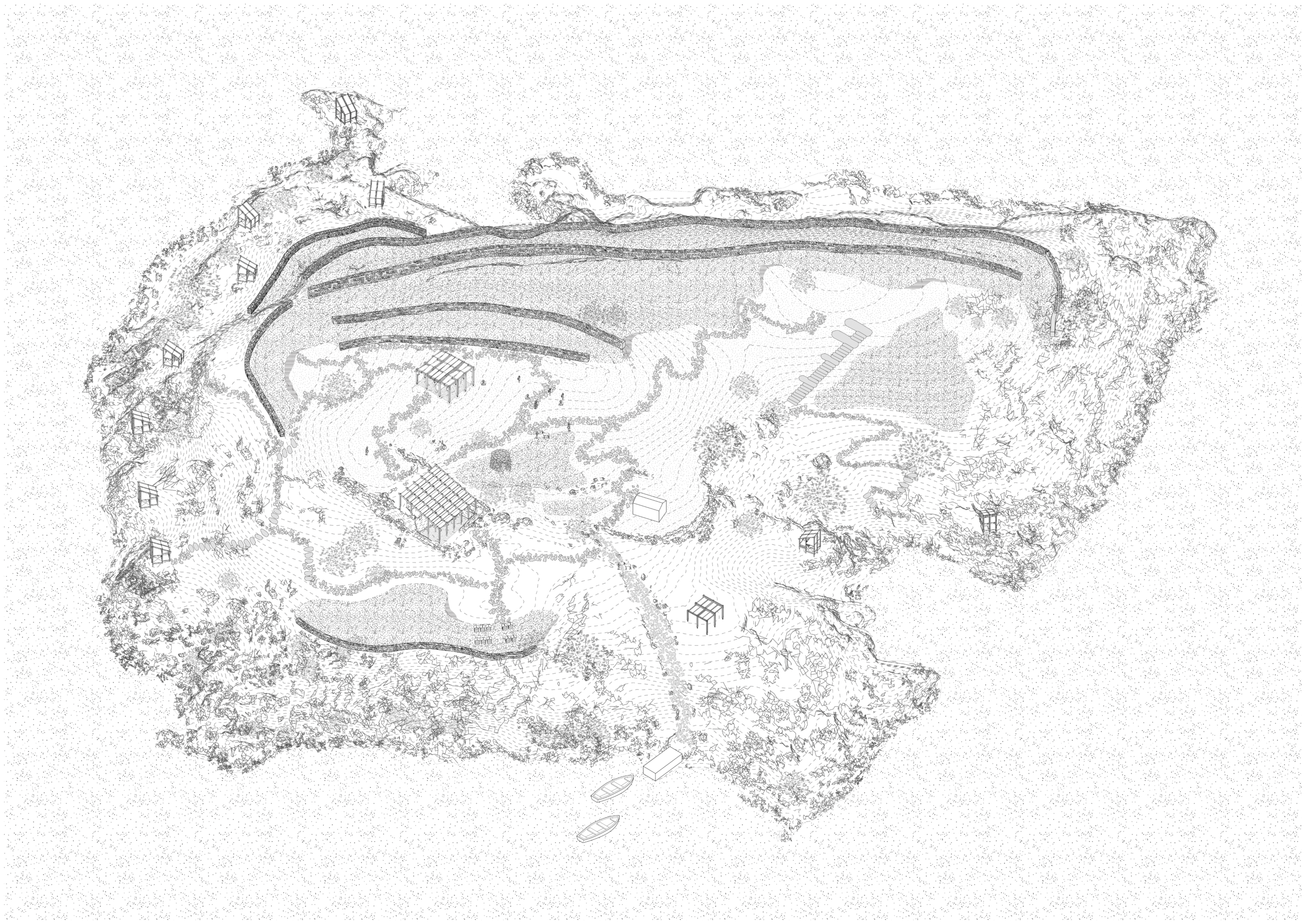
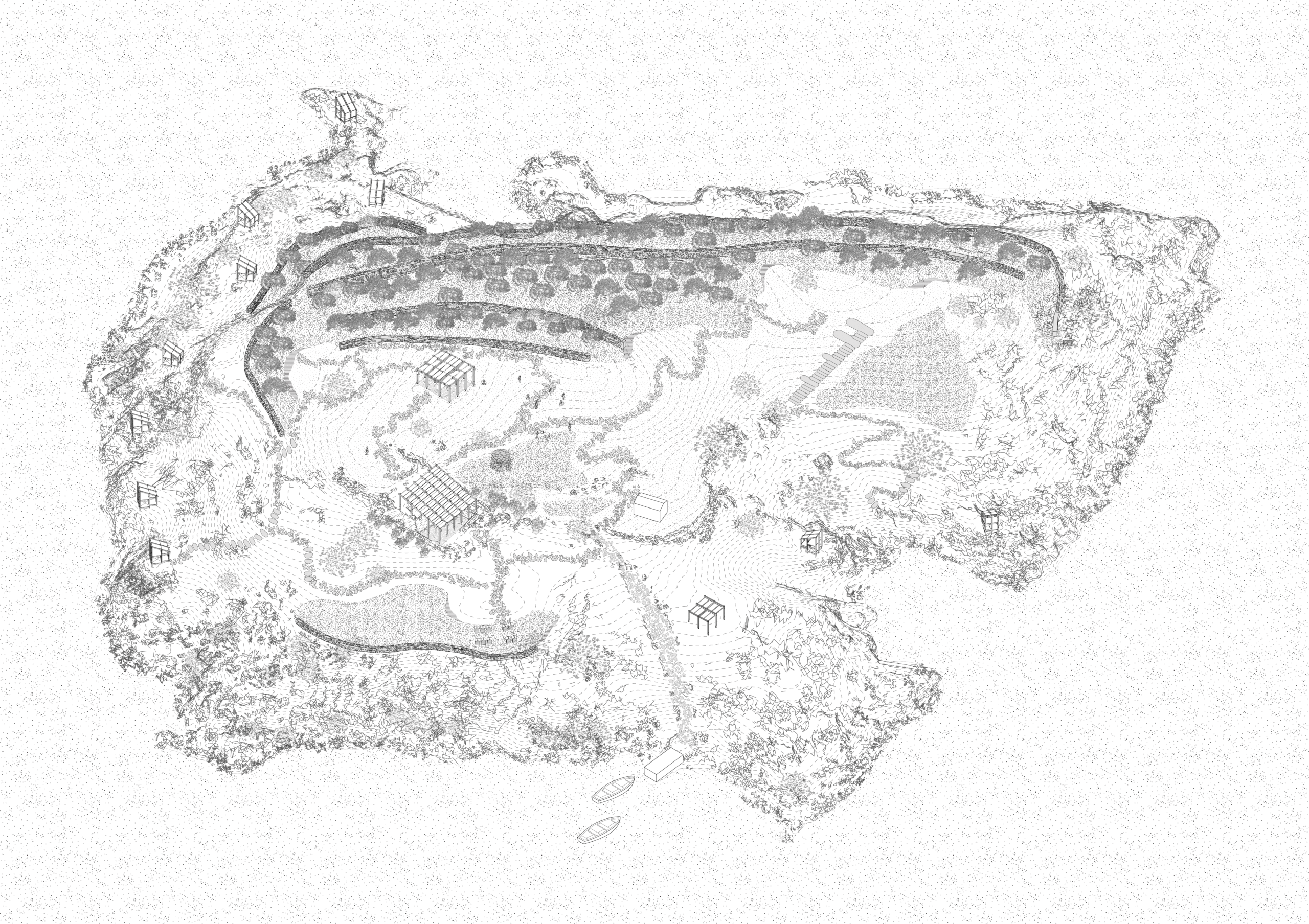
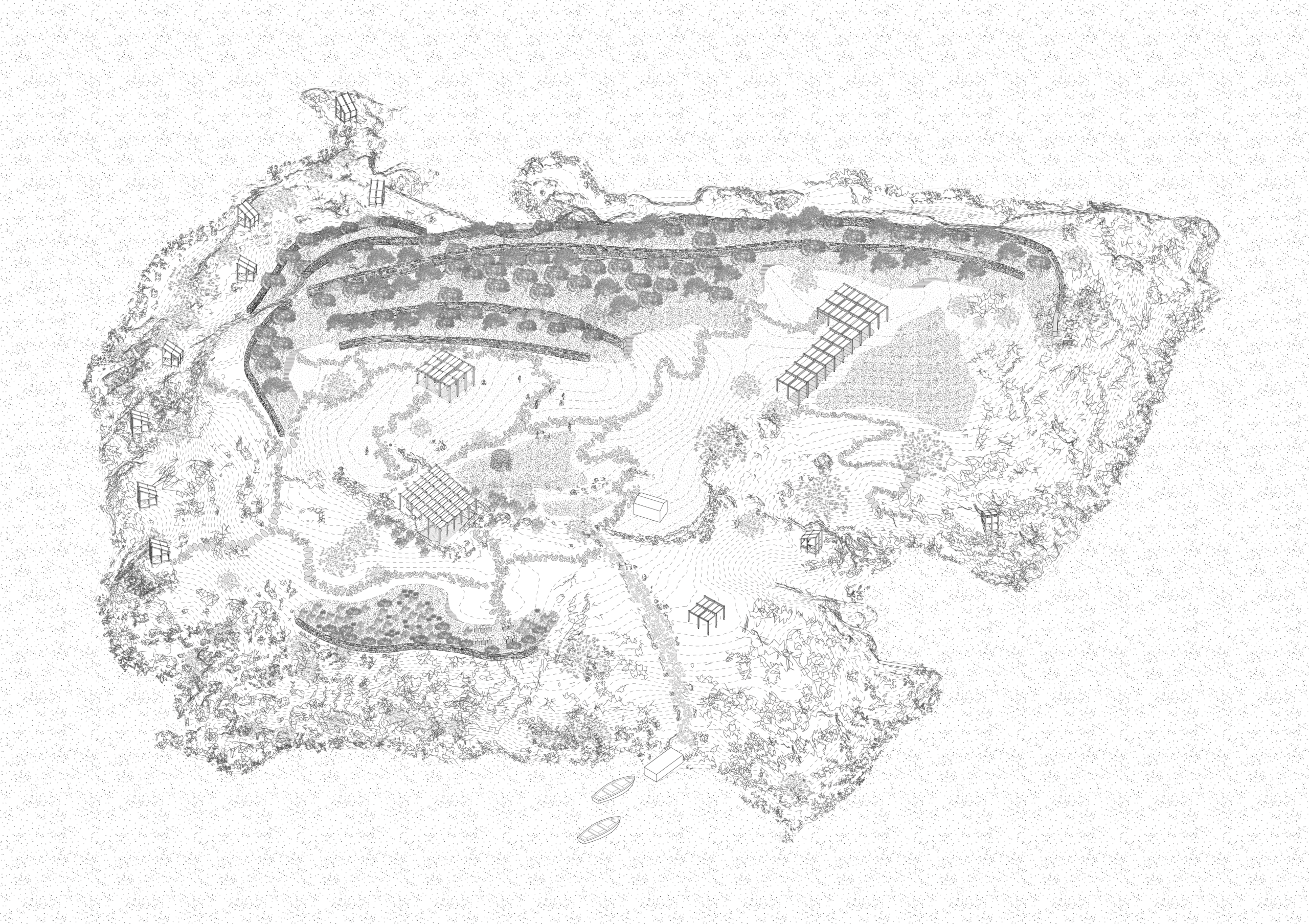
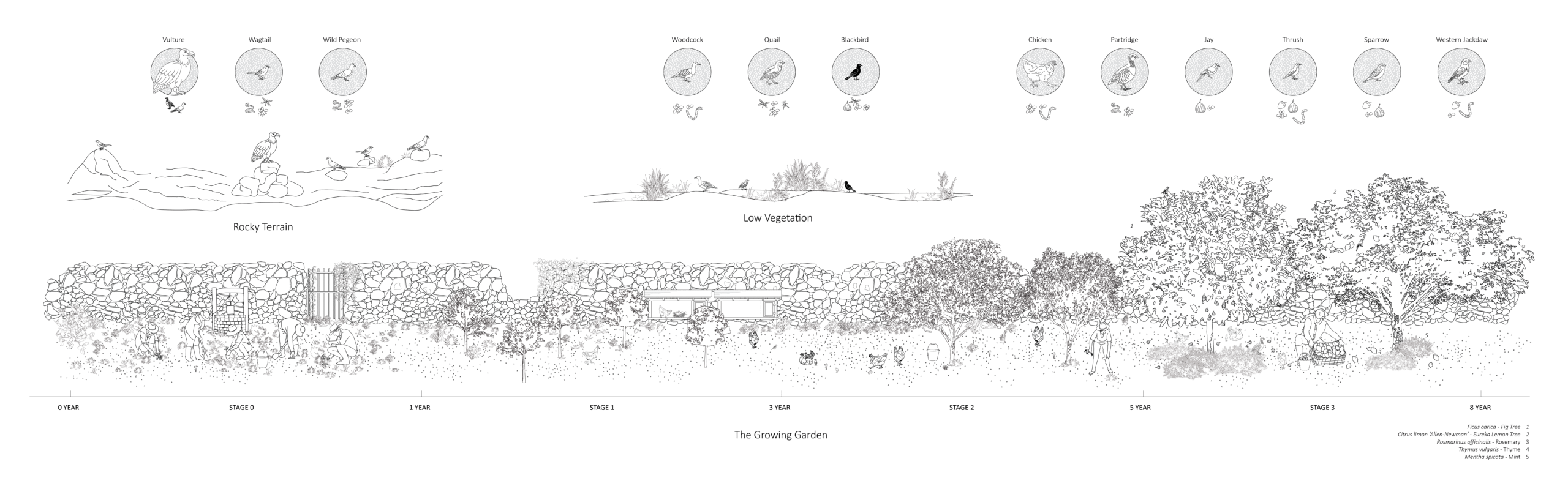
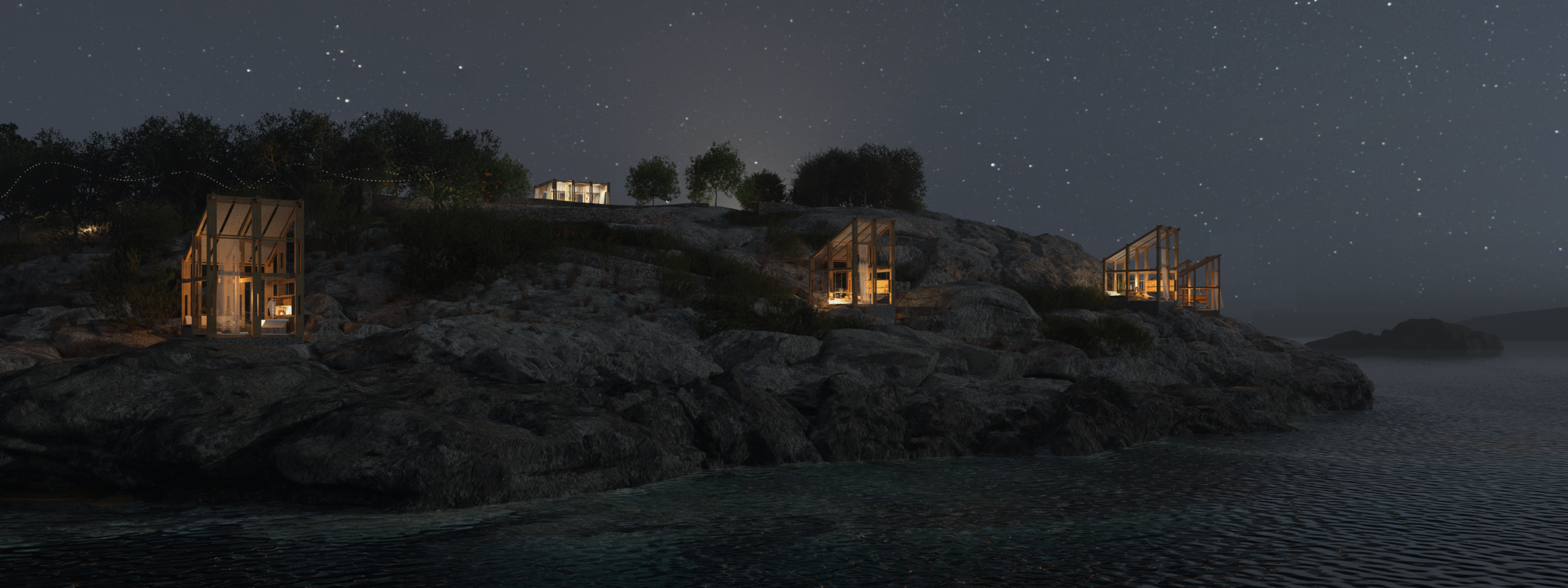
A small group of permanent caretakers, periodically joined by invited guests engaged in permaculture, initiates a continuous cycle of maintenance and cultivation. The island becomes a place of sustained work and shared responsibility, organized by a clear protocol of use and cohabitation—an open and adaptive model for ecological restoration grounded in collective care. Kivotos is understood as a ruined landscape that can be preserved—a terrain marked by the remnants of harsh agricultural labor: dry stone walls, cultivated terraces, and the solitary ruin of its former dwelling. Rather than approaching the island as a site for development, the project reactivates its productive history through the restoration of traditional land-based structures and practices.
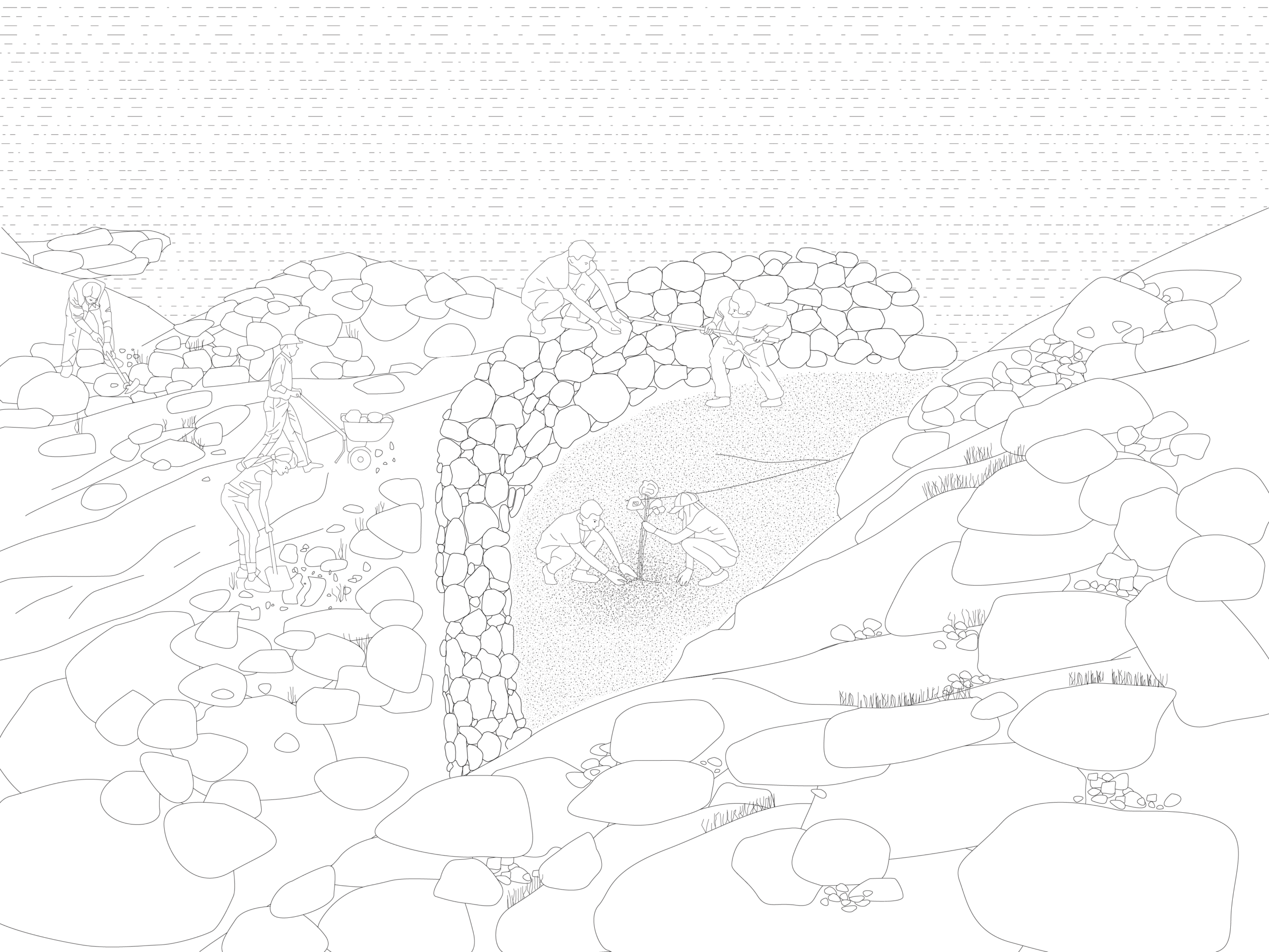
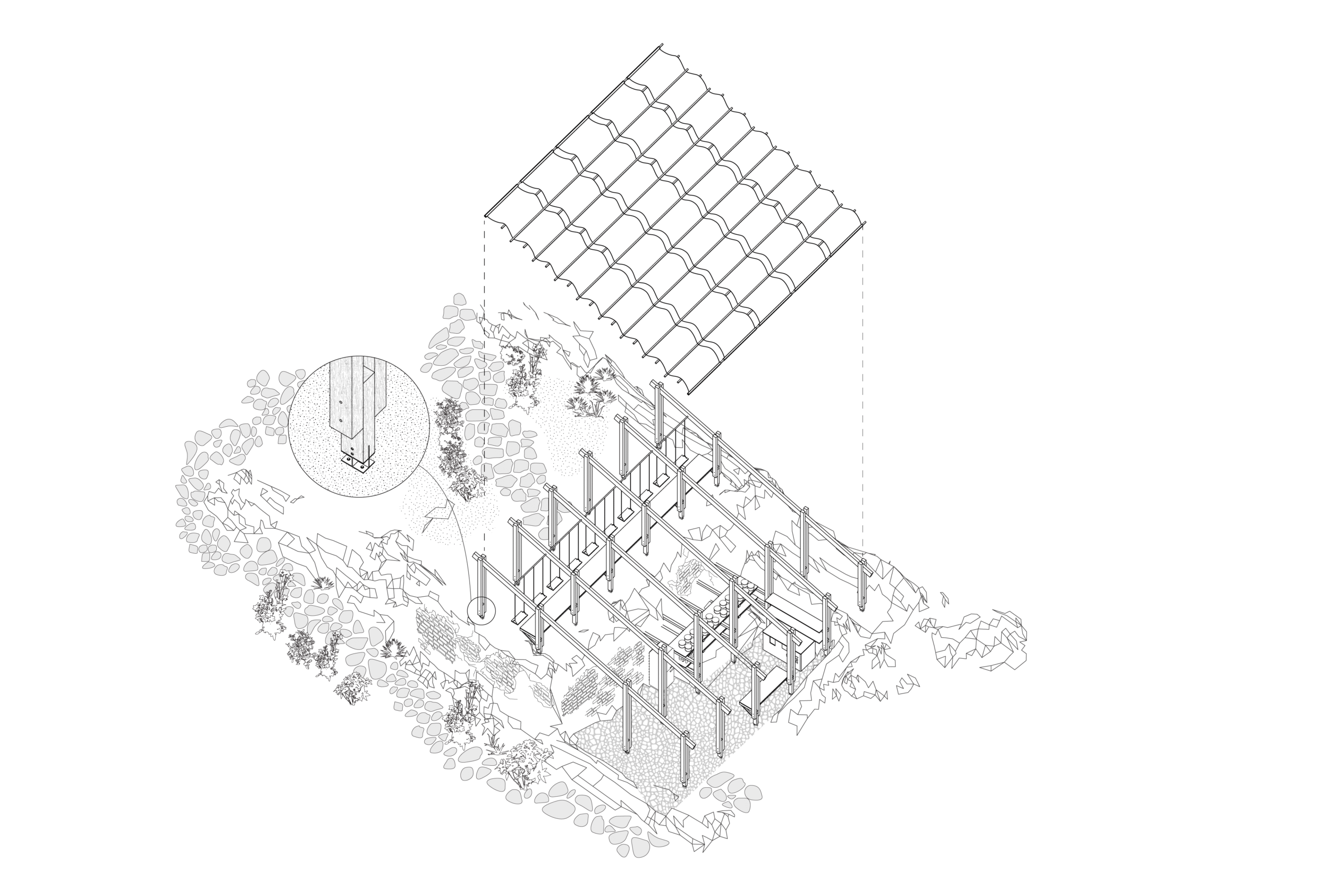
This project treats the island not as a blank slate, but as a fragile, wounded landscape in need of attentive care. Once cultivated by a solitary inhabitant, the island is now largely abandoned, its soil eroded and its agricultural memory fading. At the heart of the restoration effort lies the reconstruction of traditional dry stone walls (ξερολιθιές)—a centuries-old method of shaping and stabilizing steep terrain, which historically protected both ecology and productivity. These walls are not simply infrastructural tools, but carriers of cultural knowledge and resilience.
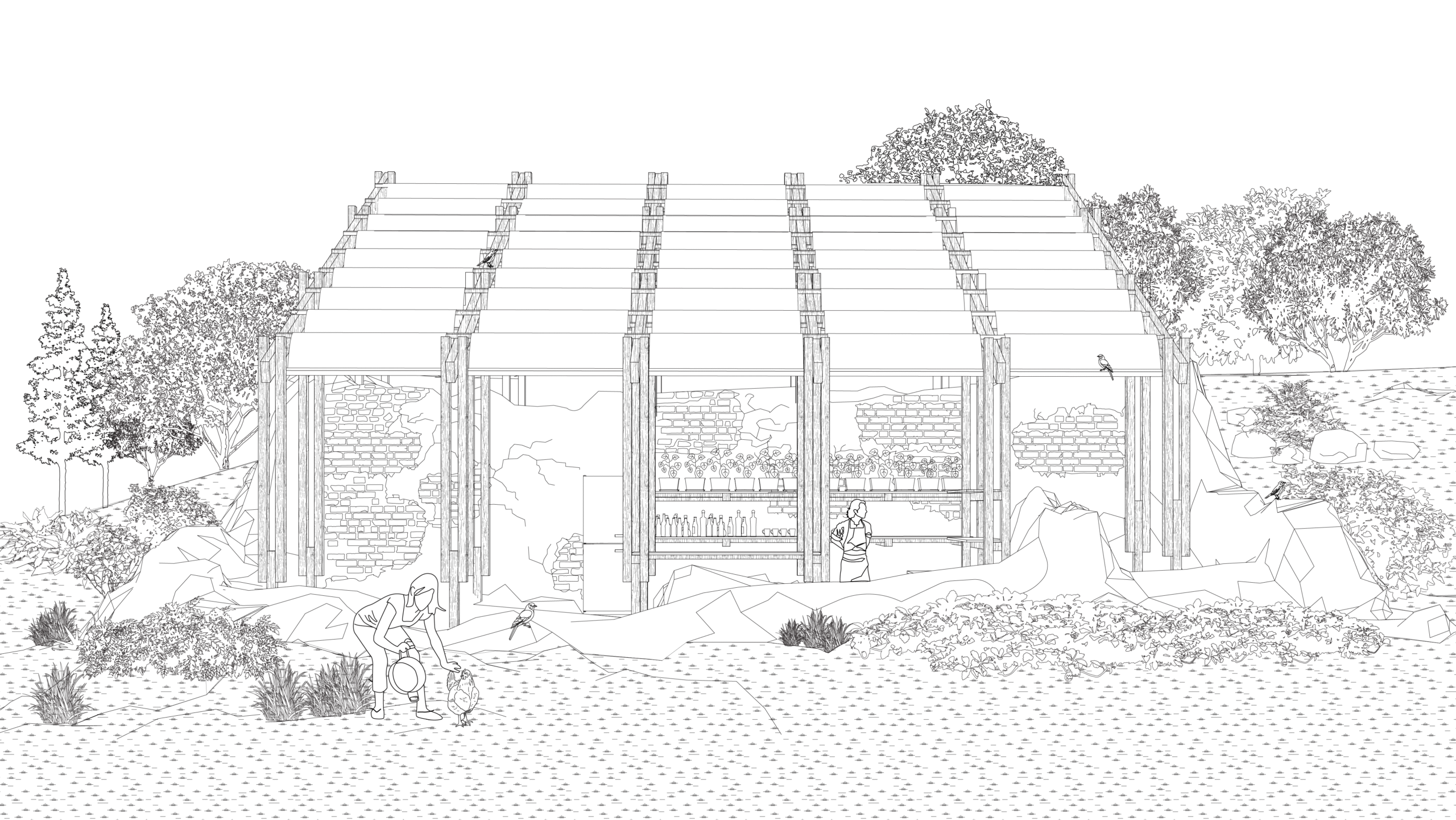
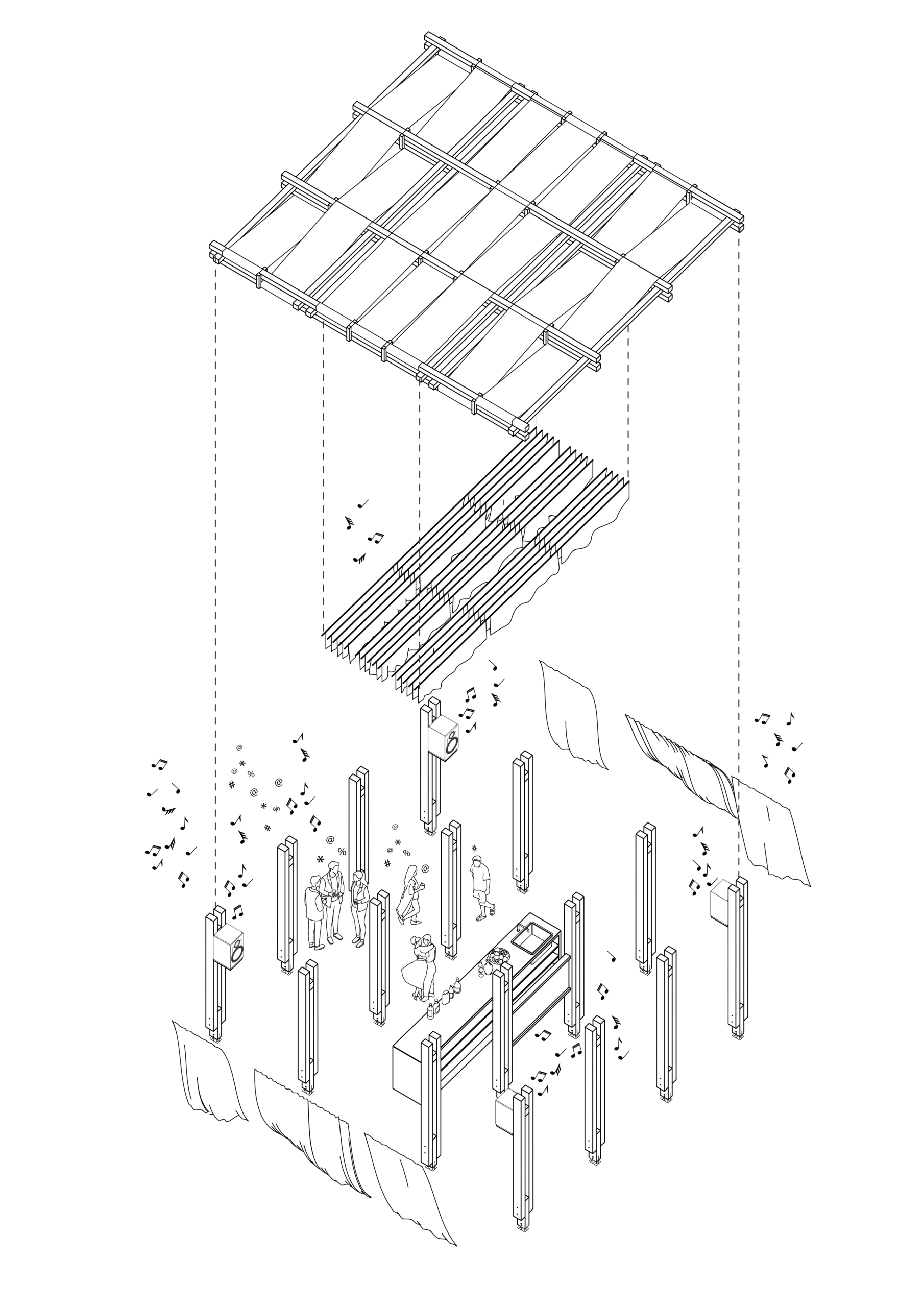
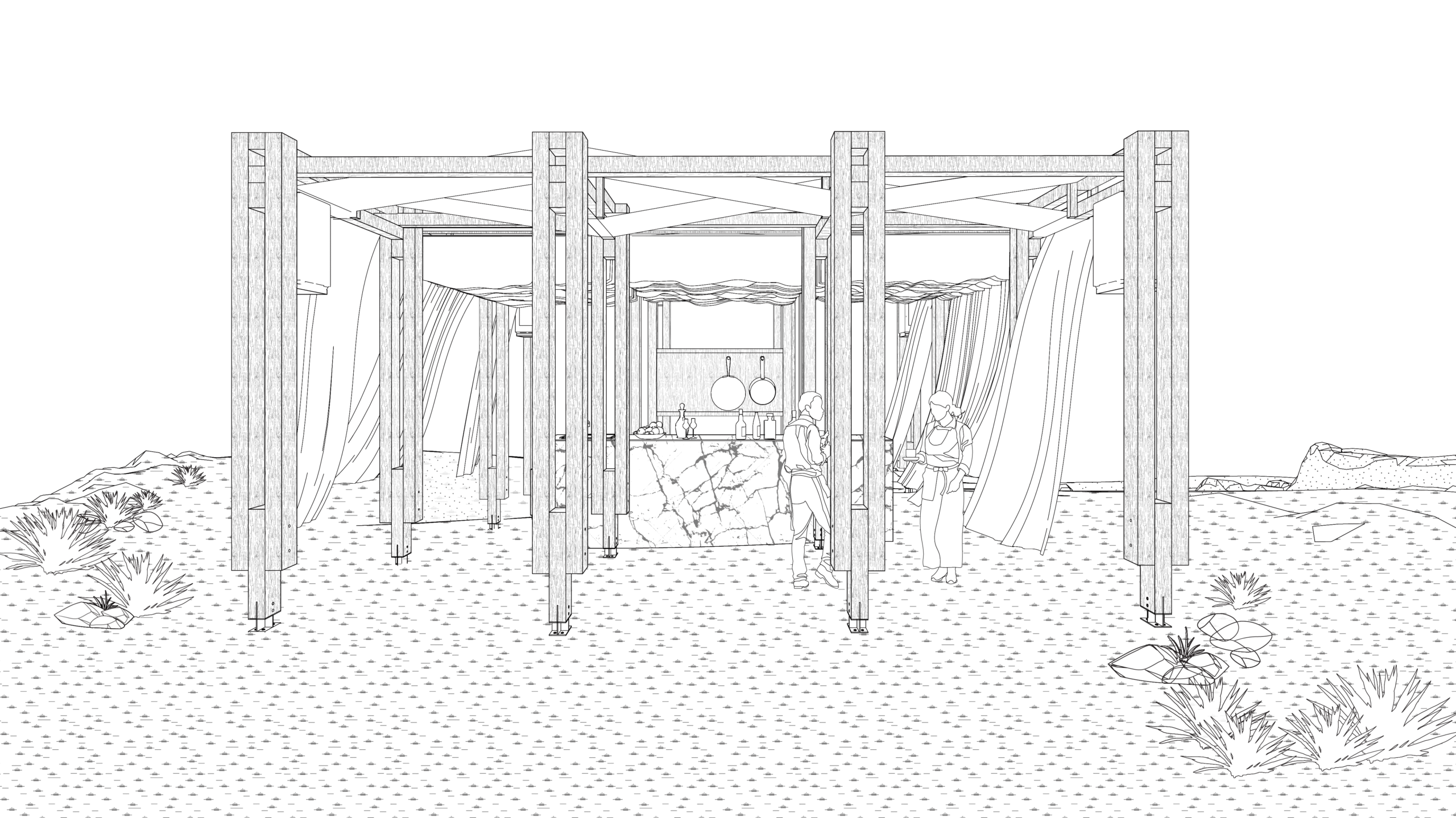
Today, a small constellation of three permanent caretakers has returned to the island, working the land not as private owners but as stewards. Periodically, they are joined by invited guests who participate in cycles of cultivation and maintenance, guided by principles of permaculture. This collaborative model resists the logic of privatized land development or extractive tourism. Instead, it repositions agricultural labor as a shared, ongoing practice of inhabitation and care.
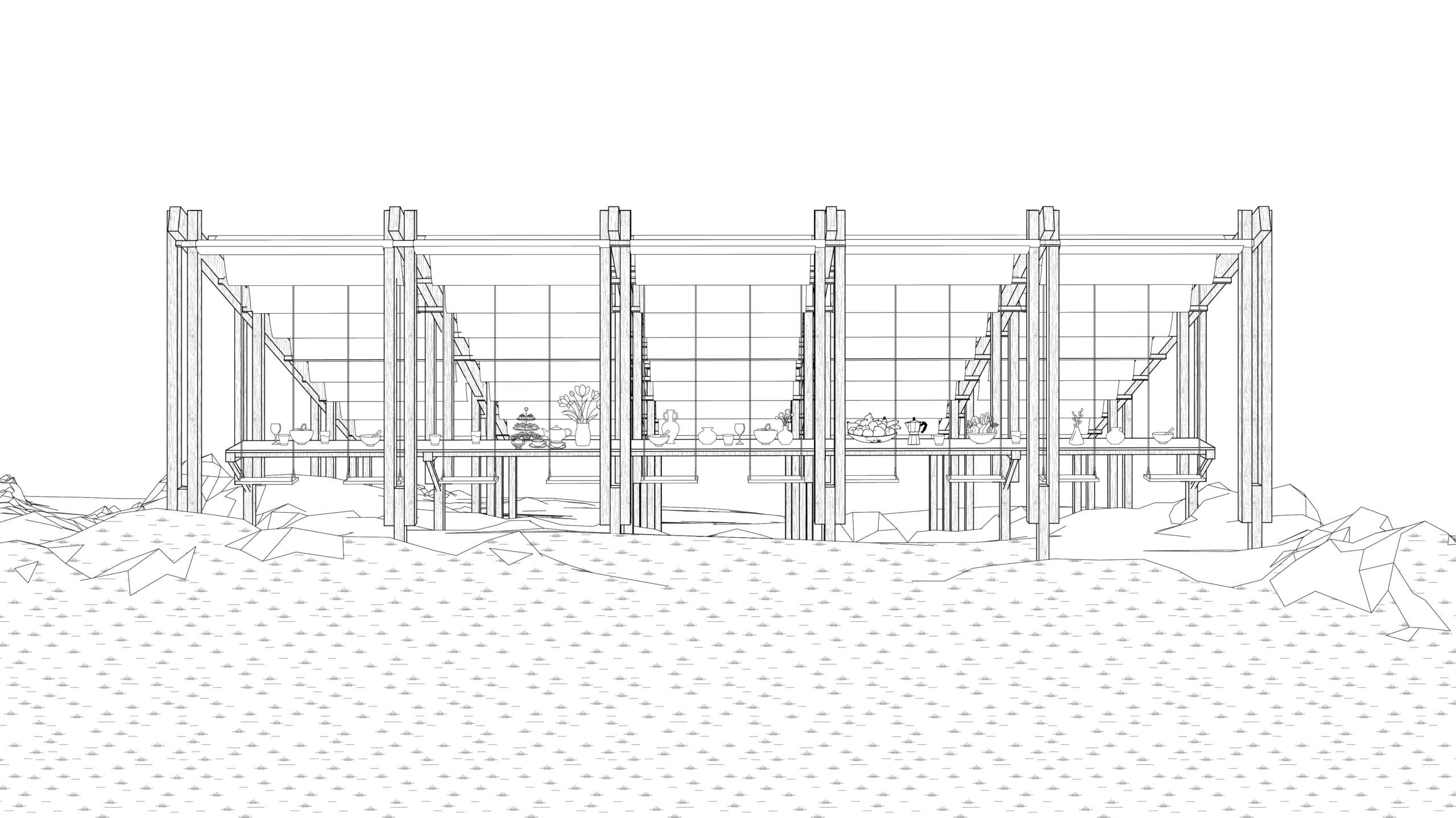
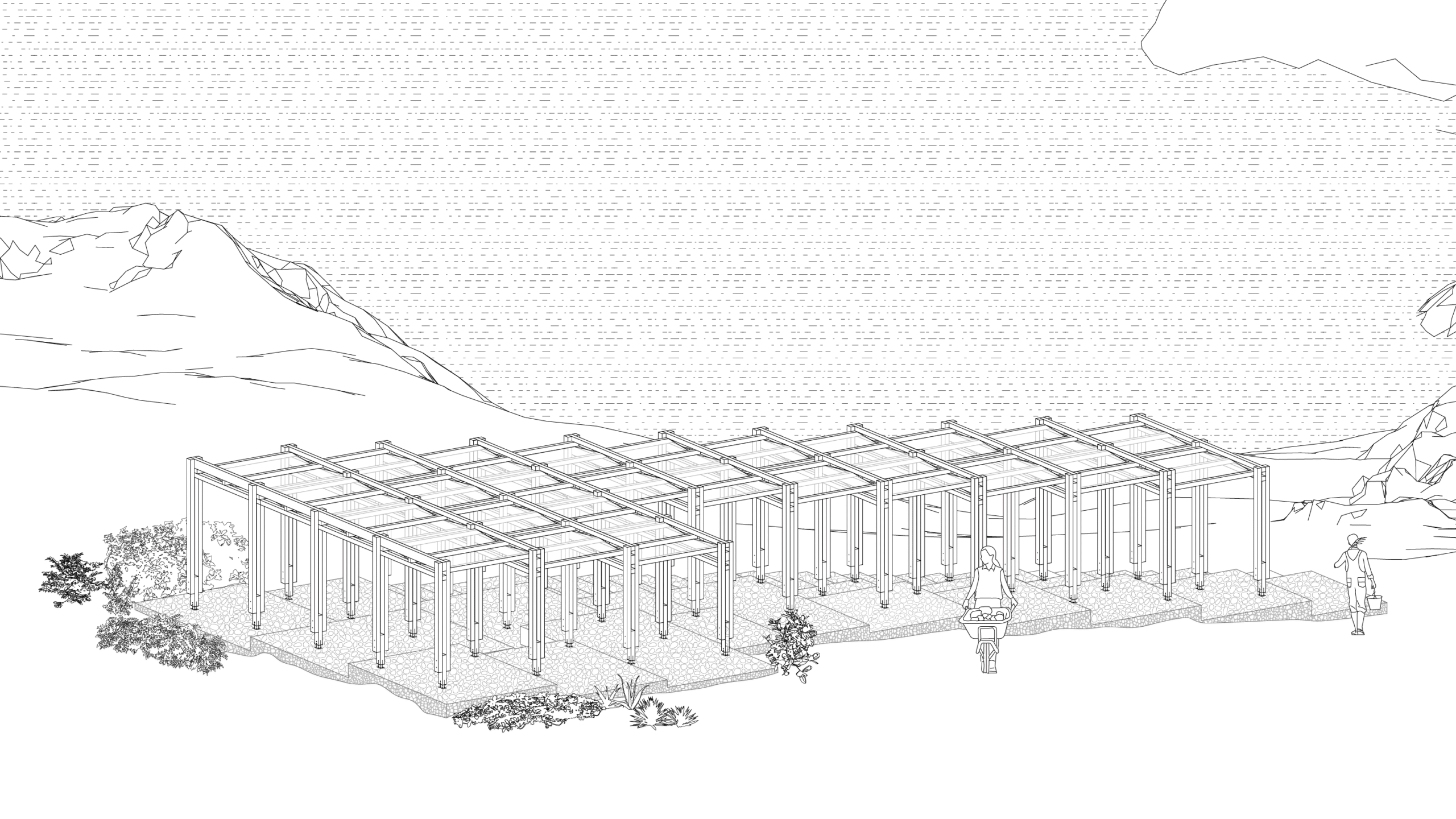
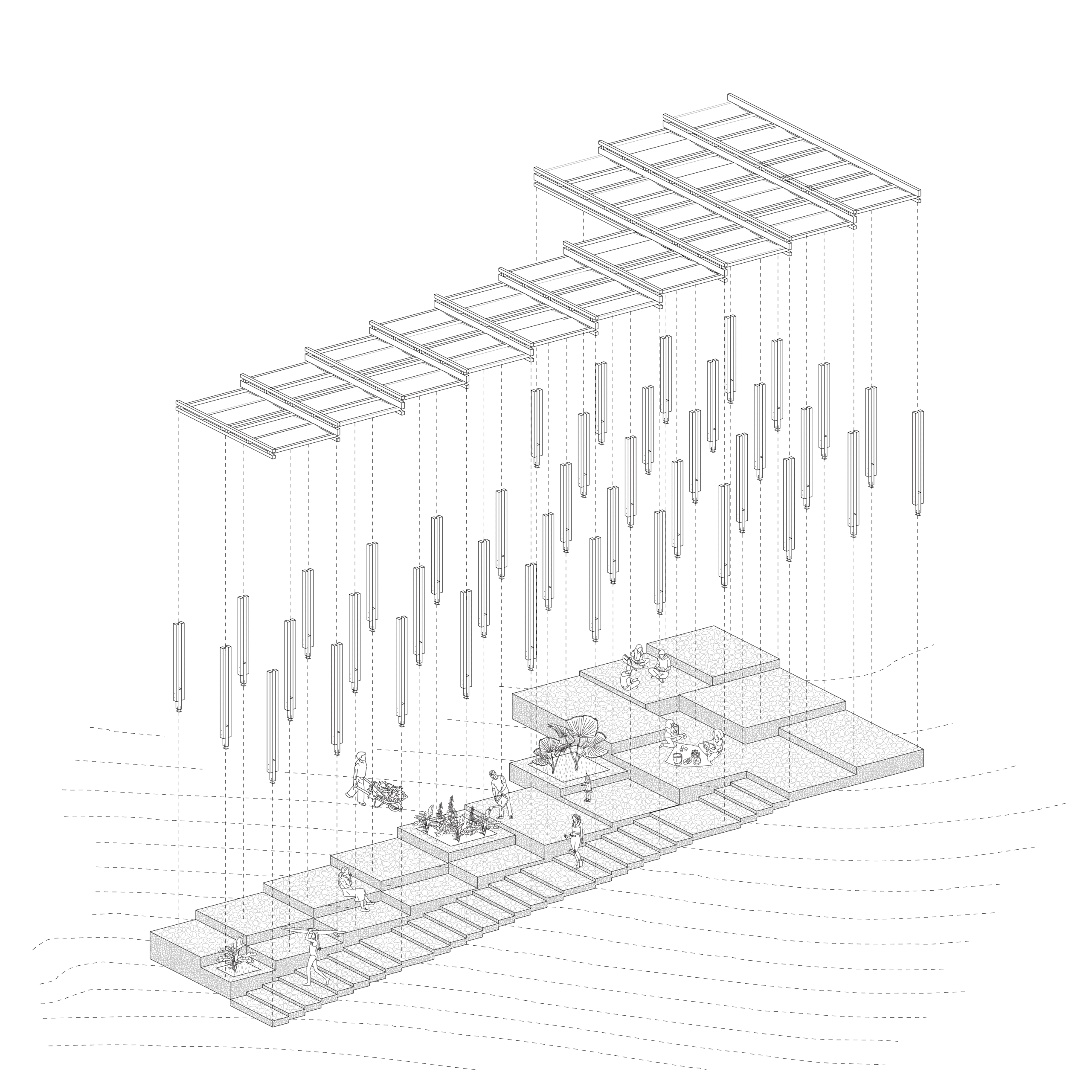
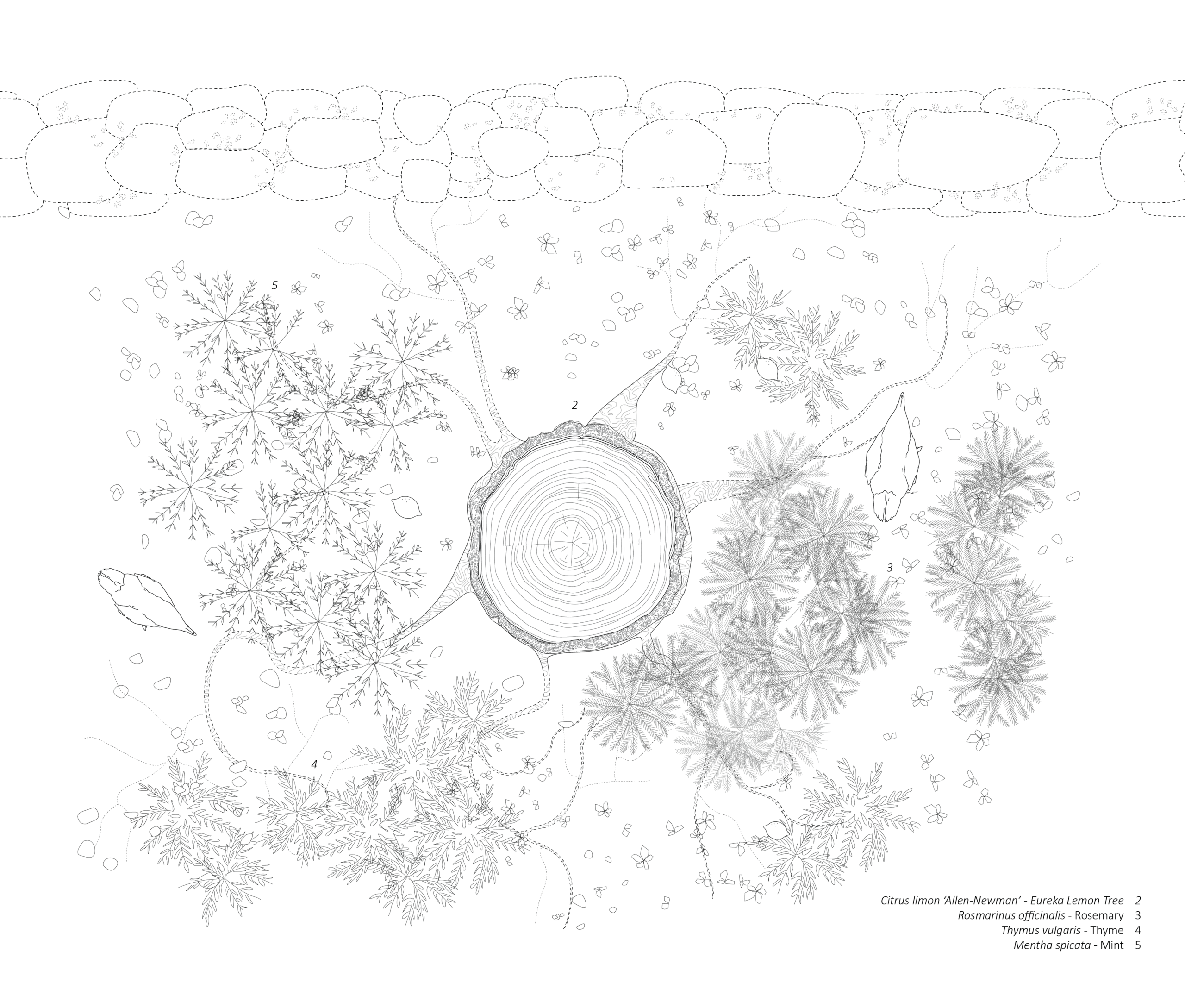
To support this vision, a clear protocol is proposed—defining zones for planting, living, gathering, and rest. The protocol also structures how new guests are invited, how long they stay, and how skills and knowledge are passed along. Rather than enforcing permanence, it encourages rhythms of seasonal return and rotation, echoing the productive temporality of the land itself.
As a precedent, the island of Tinos offers inspiration: there, thousands of kilometers of dry stone walls once preserved soil fertility and ensured long-term cultivation. Similarly, this project seeks to restore continuity through careful repair, low-impact intervention, and cultural reinvestment. Here, permaculture is not introduced as a fashionable label, but as a practical ethic—a method of re-establishing the fragile bond between human labor and ecological sustainability.
Through this approach, the island becomes not a retreat from the world, but a quiet rehearsal for another way of living—with slowness, with rhythm, and with care.
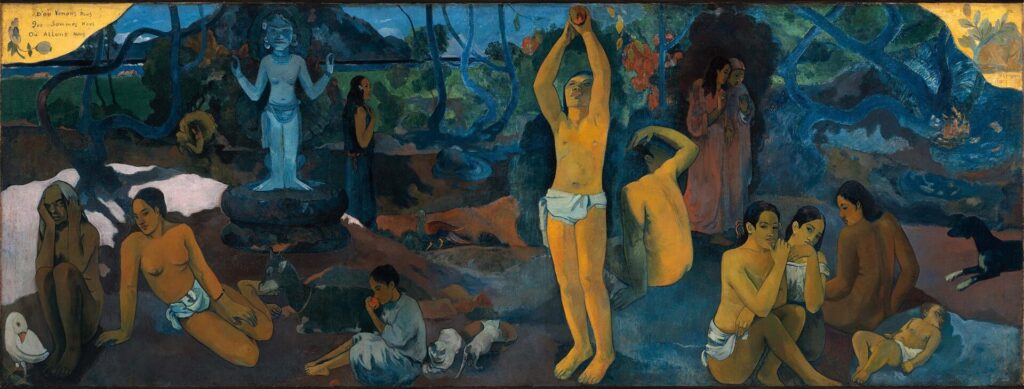
Where Do We Come From? What Are We? Where Are We Going?, Paul Gauguin, 1897–98
STAGE 0
STAGE 1
STAGE 2
STAGE 3
© 2019–2025 Mi Zhou. Images, drawings, and text by Mi Zhou unless credited.